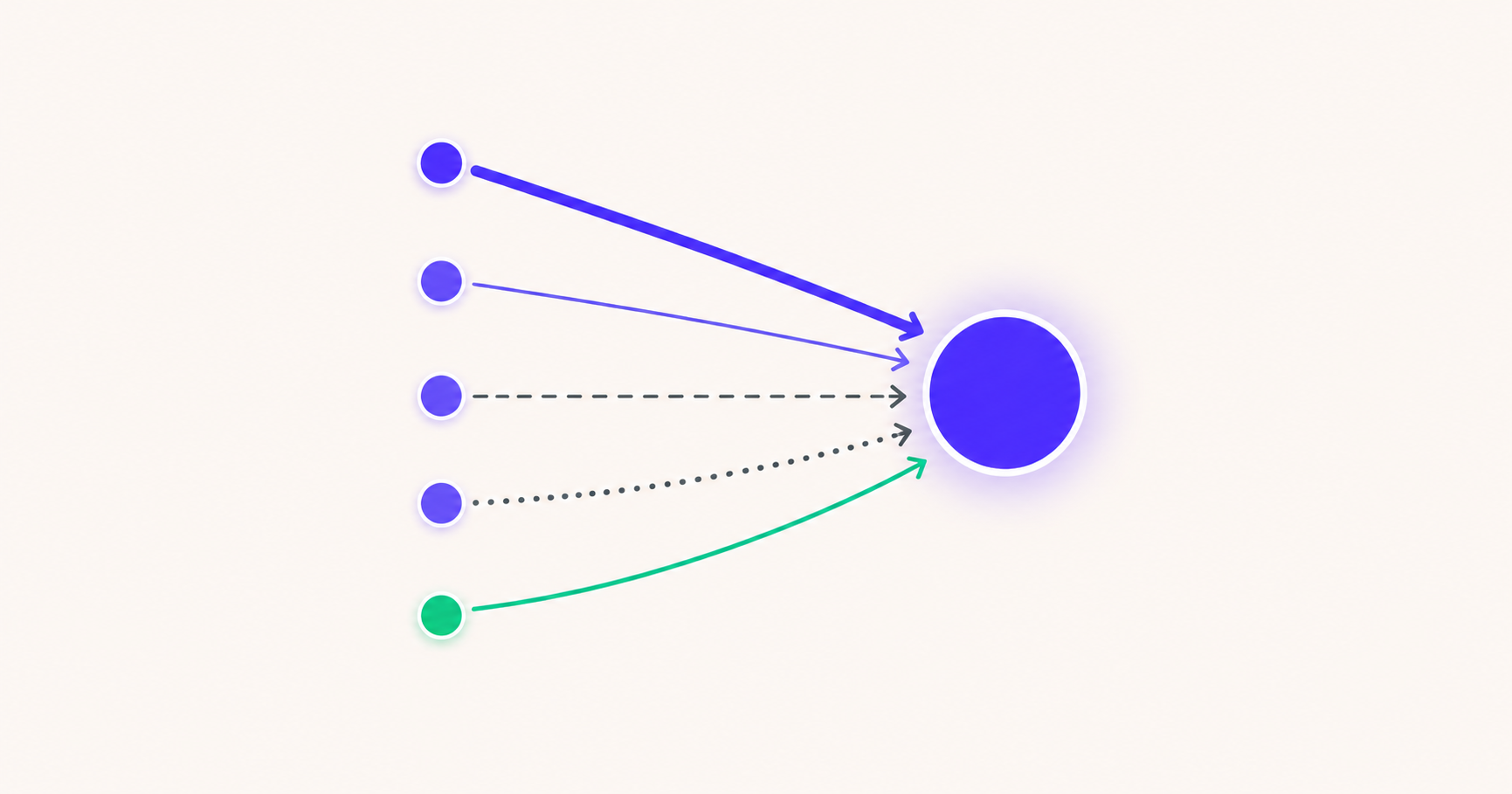
Not all backlinks do the same job, and the gap between the best and worst kind is enormous. One editorial mention in a publication your buyers read can outweigh several hundred directory listings. Knowing which type you are looking at tells you what it is worth and, more usefully, whether the next one is worth the afternoon it will cost.
Here are the types that matter, roughly strongest first.
1. Editorial links
What it is: a link inside the body of an article, placed because the writer decided your page was worth referencing.
Example: a trade publication writes about pricing strategy, cites a survey you published, and links to your research page.
Value: the highest there is. Editorial links are valuable for exactly the reason they are hard to get. Nobody can be reliably talked into one, so their presence is real evidence.
How hard: hard, and not directly requestable. You earn them by having something worth citing and making sure the right people know it exists.
2. Digital PR and news citations
What it is: coverage in news outlets and industry press, usually triggered by data, a launch, or expert commentary.
Example: you run an annual industry survey, a journalist covers the findings and credits your data.
Value: very high, and often arrives in clusters, because one piece of coverage gets picked up and syndicated.
How hard: hard and expensive, but the most scalable of the high-value types. Original data is the reliable trigger, because journalists need numbers and very few companies publish any.
The cheapest version of this
You do not need a PR agency to start. Publishing one genuinely original number
about your industry, something only you can see from your own data, is the
single most repeatable way small companies earn press links.
3. Guest post links
What it is: you write an article for another site and it includes a link back to yours.
Example: you write a piece for an industry blog and your author bio links to your homepage.
Value: moderate, and declining. Google has been explicit that guest posting at scale for links is a link scheme. Done occasionally on genuinely relevant sites with real audiences, it still works fine.
How hard: moderate, but time-expensive per link since you have to write the thing.
The line that matters
Writing for a publication you respect, where you would want the byline
regardless of the link, is fine. Buying placement on a site that accepts any
article for a fee is a link scheme with a nicer name. The tell is whether an
editor could reject you.
4. Resource page and roundup links
What it is: your page listed on a curated page of useful resources.
Example: a university careers page lists your free salary calculator among helpful tools.
Value: good. These pages are usually topically tight, which is exactly the relevance signal you want, and they tend to be stable for years.
How hard: moderate, and one of the highest-hit-rate forms of outreach, because the page already exists and its owner is actively looking for things to add.
5. Directory and citation links
What it is: listings in business directories, industry associations, and local citation sites.
Example: your company's entry in a chamber of commerce directory, or a local listing with your name, address, and phone number.
Value: low individually, but they are the baseline. Their absence looks stranger than their presence looks impressive, particularly for local businesses where citation consistency genuinely affects local rankings. Most are nofollow.
How hard: easy. This is the one type you can simply go and do.
6. Profile links
What it is: links from your accounts on other platforms.
Example: the website field on your company's social profiles, a conference speaker bio, an open-source project page.
Value: low as a ranking signal, since nearly all are nofollow, but useful for brand presence and for being findable.
How hard: trivial, which is why they are worth ten minutes and no more.
What it is: links in forum posts, community answers, or blog comments.
Example: answering a question on a niche forum and linking to your guide as the fuller explanation.
Value: near zero for ranking, since these are almost universally nofollow. Genuinely useful for referral traffic when the answer is real. Worthless and mildly harmful when it is drive-by link dropping.
How hard: easy to do, hard to do without being spam.
What it is: links that come attached to something of yours being reused, such as a chart, an infographic, or an embeddable widget.
Example: someone reproduces your chart in their article and credits the source.
Value: varies, but the mechanism is excellent because it scales without further effort from you. Every reuse is another link.
How hard: high up front, near zero afterwards. Make the asset once, it earns for years.
Quick comparison
| Type | Ranking value | Effort | Typically |
|---|
| Editorial | Highest | High | dofollow |
| Digital PR / news | Very high | High | dofollow |
| Resource page | Good | Moderate | dofollow |
| Guest post | Moderate | Moderate | dofollow |
| Image / embed | Moderate | High, once | dofollow |
| Directory / citation | Low, baseline | Easy | nofollow |
| Profile | Low | Trivial | nofollow |
| Forum / comment | Near zero | Easy | nofollow |
How to tell which type you have
Look at two things. Where the link sits, meaning whether it is inside article text a person wrote or in a list of businesses, tells you the category. How it is marked, meaning dofollow or nofollow, tells you whether it passes authority. A backlink checker shows the second one per domain without you inspecting page source.
The fastest way to understand which types matter in your specific niche is to look at what is already working for the sites above you. Pull a competitor's referring domains and the mix tells you immediately whether your field is won with digital PR, resource pages, or something else.
See what types of links your competitors have
Paste a competitor domain and get their referring domains back, strongest first, with dofollow status flagged. The mix tells you which link types actually work in your niche.
The practical takeaway
Spend an afternoon on the bottom half of this list once, get the baseline covered, and then never think about it again. Spend the rest of your effort on the top half, where a single link can be worth more than everything below it combined.
If you want the method rather than the taxonomy, how to get backlinks is the playbook, and where to get backlinks covers the specific places worth pursuing.