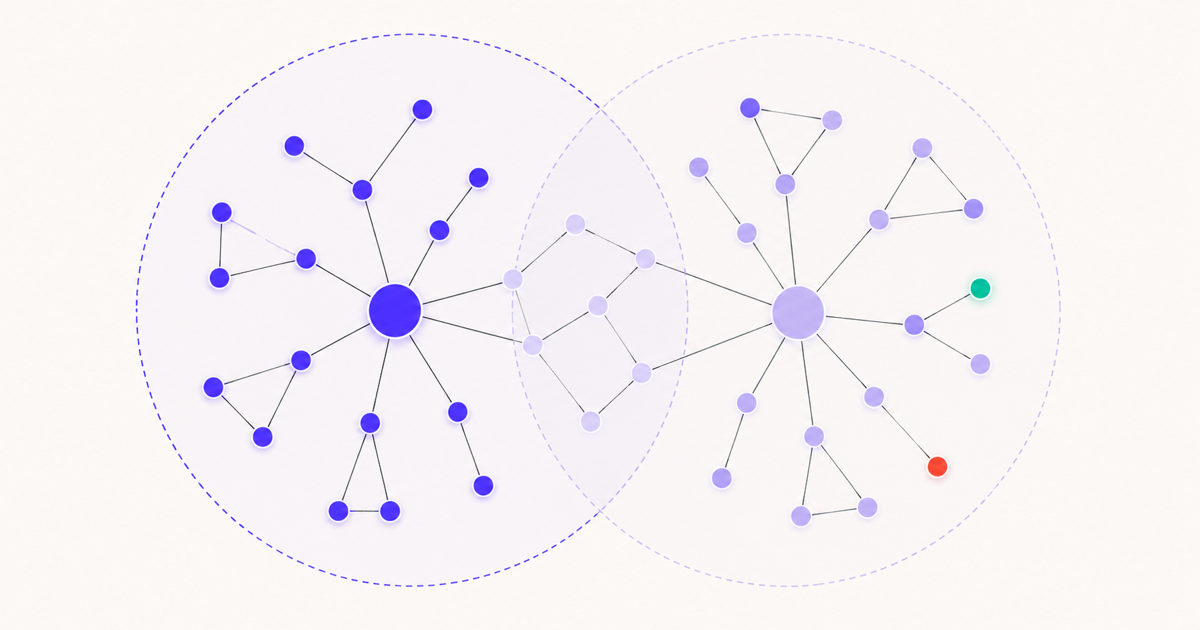
Most link-building advice tells you to go earn links. A backlink gap analysis tells you which links, and it does it by reading a map your competitors already drew. Instead of guessing where a link might come from, you find the exact sites that already link to businesses like yours and simply have not linked to you yet.
This guide walks the whole method start to finish: what the gap actually is, how to pull it, how to score which gaps are worth your time, and the honest call on when to earn a link versus buy it. No enterprise subscription required to follow along.
What a backlink gap analysis actually is
A backlink gap analysis compares your backlink profile against several competitors to surface the referring domains that link to them but not to you. That set of missing domains is the gap.
One distinction matters before you start, because it is where most people measure the wrong thing:
- Backlink count is the total number of links. It is inflated by sites that link many times, so it flatters big profiles and tells you little.
- Referring domains are the unique websites linking to a site. Ten links from one blog count as one referring domain. This is the honest measure, and it is what a gap analysis should compare.
Always run the gap on referring domains, not raw backlinks. You are looking for distinct sites you could get a link from, not counting links you will never see.
Why the gap is the best prospect list you will ever build
The reason a gap analysis beats a cold list of "sites that might link to me" comes down to one idea: a domain that already links to two or three of your competitors has proven three things at once.
- It links within your niche, so a link from it is relevant.
- It links to more than one player, so it is not exclusive to a single brand.
- It does not link to you yet, so there is something to actually win.
That intersection is the shortest, warmest prospect list in link building. A site that links to three of your rivals is far more likely to link to you than a random high-authority domain that has never touched your topic.
A backlink gap turns "who has the most links?" into a far more useful
question: "which sites link to everyone in my niche except me?"
What you need (and when free is enough)
You need two things: a way to see a competitor's referring domains, and a way to compare them against your own. Here is the honest tool picture across price tiers.
| Option | What it gives you | Coverage | Cost |
|---|
| Our free checker | Any competitor's referring domains, plus your gap when you add your domain | Sample, enough for research | Free |
| Ahrefs / Semrush | Full link intersect across many competitors, filters, history | Deepest | ~$129–139/mo |
| Free stack (GSC, free checkers) | Your own links plus competitor samples | Partial (roughly 20–40% of links) | Free |
The trade-off is simple. Free tools show a sample of the full link profile rather than every link, which is exactly enough when you are researching a handful of competitors. Paid suites earn their price when you need to compare ten competitors at once, filter at scale, or track the gap over time. Start free. Upgrade only when the free workflow is the thing slowing you down.
Step 1: Find your real search competitors
Your business rivals are not always your search rivals. The sites you are competing with for links are the ones ranking above you for the keywords you want, and they are sometimes not who you would expect.
Search your target keywords, note the sites that consistently appear in the top of the results, and pick three to five that are close to you in size and topic. Do not pick only the giants. A gap against Ahrefs or Wikipedia is full of links you will never earn.
Step 2: Pull who links to them but not you
This is the mechanical heart of the analysis. In a paid tool this is the "link intersect" report. In our free checker, you enter a competitor and then add your own domain, and it shows the gap directly, the referring domains linking to them that are not linking to you.
See your backlink gap in seconds
Enter a competitor to map their referring domains, then add your own domain to reveal exactly which of those links you are missing. Free, no account needed.
However you pull it, the output is the same: a list of domains that link to your competitors and not to you. Resist the urge to export ten thousand rows. The next two steps are about cutting that list down to the fifteen or twenty domains actually worth your week.
Step 3: Filter out the junk
Not every domain in the gap is a prize. Before you score anything, strip out the noise:
- Nofollow-only and clearly low-value links (comment spam, scraped directories, expired domains).
- Sites with a high authority score but no real traffic, a common signal of a private blog network rather than a genuine site.
- Off-topic domains where a link would make no sense to a human reader.
What survives is a list of relevant, real sites that link within your niche. Now it is worth ranking.
Step 4: Score and prioritize what is left
This is the step almost every guide skips, and it is where a gap analysis becomes a plan instead of a spreadsheet. Score each surviving domain from 1 to 5 on four factors, then weight them so the factors that actually predict a won link count for more.
| Factor | Weight | Score of 1 | Score of 5 |
|---|
| Relevance | 35% | Unrelated to your niche | Squarely in your niche |
| Attainability | 30% | No realistic path in | Obvious path (open list, directory, easy pitch) |
| Overlap | 20% | Links to one competitor | Links to three or more competitors |
| Authority | 15% | Low authority, little traffic | Strong authority with real traffic |
Then compute a single priority score on the same 1 to 5 scale:
Priority = (Relevance × 0.35) + (Attainability × 0.30) + (Overlap × 0.20) + (Authority × 0.15)
Chase the highest scores first. Weighting relevance and attainability above authority is deliberate: a link you can realistically win from a relevant site beats a prestigious one you will never earn.
A worked example. A niche resource page that links to two of your competitors, is clearly on-topic, and openly accepts submissions, with moderate authority:
- Relevance 5, Attainability 5, Overlap 3, Authority 3
- Priority = (5 × 0.35) + (5 × 0.30) + (3 × 0.20) + (3 × 0.15) = 4.3
Now contrast a national news site that mentions one competitor in a single editorial piece:
- Relevance 4, Attainability 1, Overlap 1, Authority 5
- Priority = (4 × 0.35) + (1 × 0.30) + (1 × 0.20) + (5 × 0.15) = 2.65
The resource page wins, even though the news site has far more authority, because you can actually get the link. Fifteen domains scored this way beat three thousand unranked rows.
Step 5: Earn it or buy it (the honest call)
Here is the part the tool vendors gloss over. Most of a competitor's referring domains are earned, editorial links you cannot buy, and you should not try to. But a meaningful slice of any gap is genuinely obtainable through legitimate paid channels: niche directory listings, sponsorships, and advertising placements.
My rule: sort the scored list into three buckets.
- Earn the editorial and relationship links. These are the durable ones, worth a real outreach effort.
- Pay for the placements that are legitimately paid, such as directory listings, sponsorships, and advertising, when you want to close the gap faster than outreach allows.
- Skip anything that is neither earnable nor a clean paid placement nor clearly relevant. There is always a better target.
Know the line on paid links
Google's spam policies are clear: a paid link meant to pass ranking value is a
violation. That does not mean you can never pay for a link. It means paid and
sponsored links must be marked with rel="sponsored" or rel="nofollow" so
they do not pass ranking signals. Buying dofollow editorial links purely to
move rankings is against policy and carries real risk. Pay for reach,
relevance, and relationships, not for ranking signals you are trying to hide.
Do not let a vendor tell you every gap link is for sale, or that a paid dofollow link is safe. Most gap links are not for sale at all, and the earned ones are what actually move you.
Step 6: Turn the list into links
A scored list does nothing until you work it. For each target, the link type tells you the play: pitch to get added to a resource page, offer a better replacement for a broken link, contribute a piece to a publication, or submit to a relevant directory. The full playbook is in how to replicate a competitor's best backlinks.
Then put a date on your calendar to run it again. The gap you close this quarter reopens as competitors earn new links, so a standing quarterly pass keeps a steady supply of warm, pre-qualified targets coming.
What this means
A backlink gap analysis is not a one-time report. It is a repeatable engine
for finding your warmest link prospects. Run it on your real search
competitors, score the gap ruthlessly, earn what you can and buy only what is
fair, and repeat it on a schedule.
If you are newer to link research, start with how to find your competitors' backlinks for the basics, then use how to analyze a competitor's backlink profile for the wider reading framework this gap method sits inside.